







31-October-2026

The Delhi Declaration adopted at the ARISE Cities Forum on 28 October calls for stronger local action on climate goals, according to the Housing and Urban Affairs Ministry’s release of 29 October. It is a collective commitment, not a new building regulation or an automatic source of project funding.
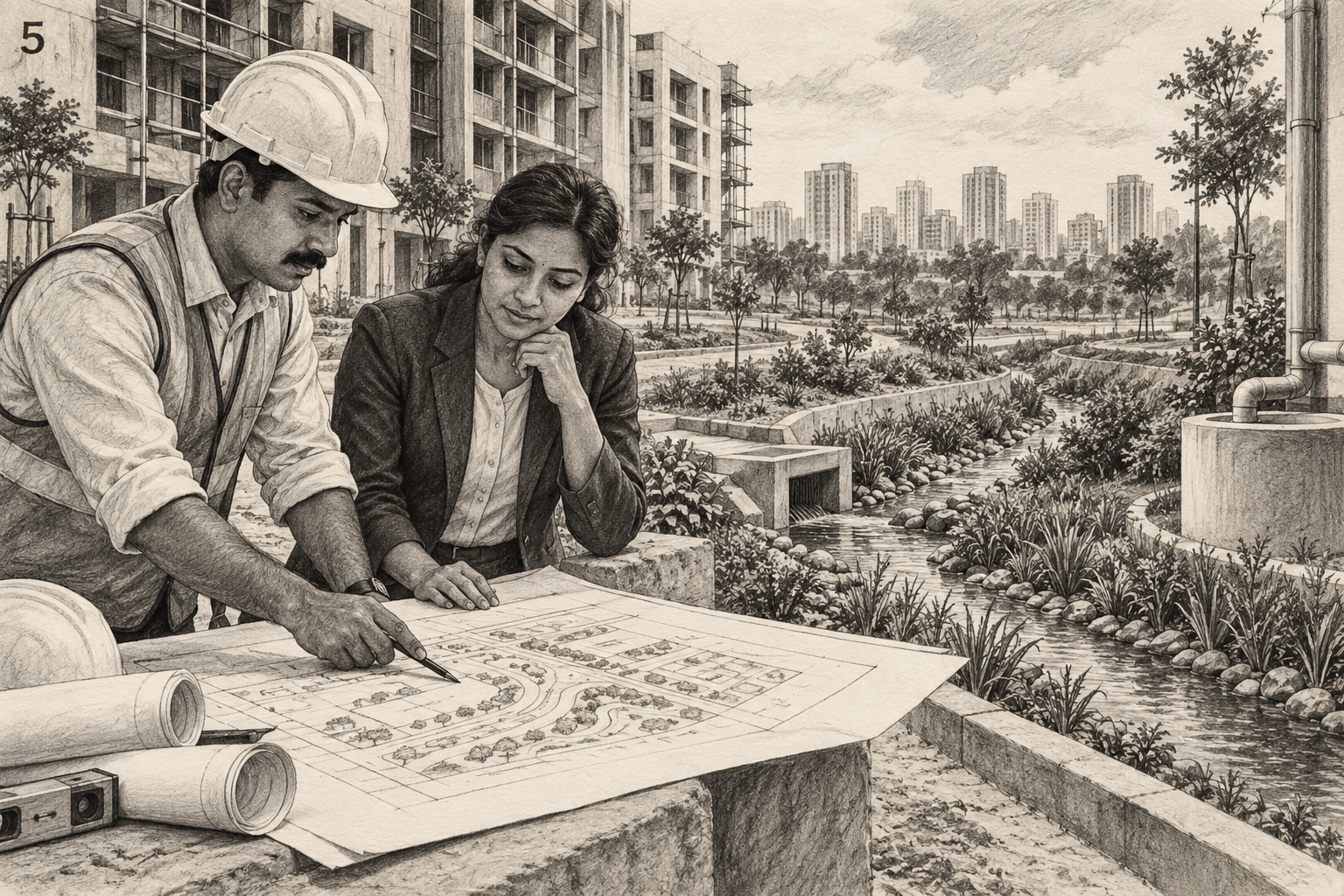
Its relevance to real estate is immediate. Climate resilience becomes meaningful through the decisions that determine where buildings stand, how water moves and whether essential services remain functional.
The Property Times believes that resilience must be demonstrated in engineering and maintenance budgets. A green description in a brochure cannot substitute for working drainage, protected electrical systems and reliable water management.
Developers should assess the effects of their projects beyond the boundary wall. Rainwater diverted from one property does not disappear; it can become another neighbourhood’s problem.
Municipal authorities, meanwhile, must provide the infrastructure and information necessary for responsible development. Accountability cannot be transferred entirely to either side.
The Property Times questions whether project approvals and buyer disclosures adequately explain site-specific exposure to flooding, heat and service interruption. Buyers need understandable information about relevant risks and the measures designed to manage them.
Such disclosure should be technically grounded. It must neither conceal vulnerabilities nor promise protection that engineering cannot guarantee.
The Property Times recommends coordinated assessments of drainage catchments, water demand and emergency access before major developments proceed. Responsibilities for construction, inspection and long-term maintenance should be recorded clearly.
Professional bodies can help establish comparable reporting. Lenders and investors should examine whether promised resilience measures remain funded throughout the project.
The declaration provides an occasion to convert broad commitment into practical responsibility.
Put climate resilience into drawings, budgets, inspections and maintenance contracts. A development’s credibility depends on how it functions when conditions become difficult.


